



©SSAMM – Educational Line of Sight (how learning and assessment connect)
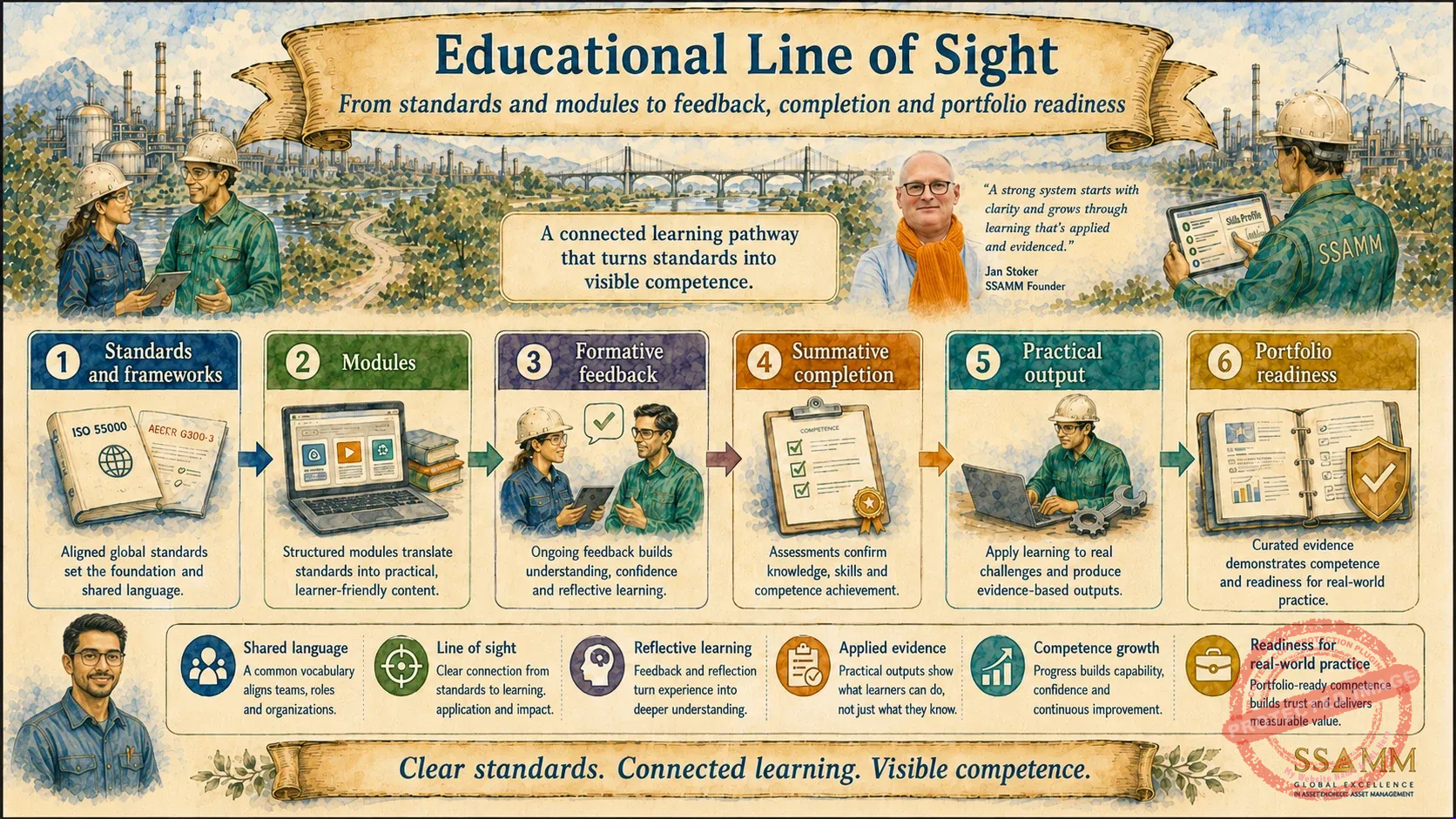
We apply a traceable learning line: from normative frameworks to practical application and demonstrable learning outcomes.
Standards & frameworks → Modules → Formative feedback → Summative module completion → Demonstrable outcomes & rationale → Portfolio readiness
Formative and summative (short and practical)
Assessment is organised per module and combines:
- Theory assessment per block (to make key concepts and reasoning explicit)
- An individual practice case (application in your context) as the core of module completion
- Module completion through cases and project assignments, ensuring the output is verifiable, transferable and usable
The output consists of concrete, verifiable practice results and rationale (e.g., decision records, process overviews and KPI reporting) that are transferable and can be used for portfolio readiness.
What differentiates this programme is that it is not built as a loose collection of topics, but as one integrated standardisation and application framework: AM-governed (governance/legitimacy/line-of-sight) and maintenance-centred (process system, methods and practice output). We safeguard this integral approach explicitly through the VCS Line of Sight and the Maintenance Landscape Model.
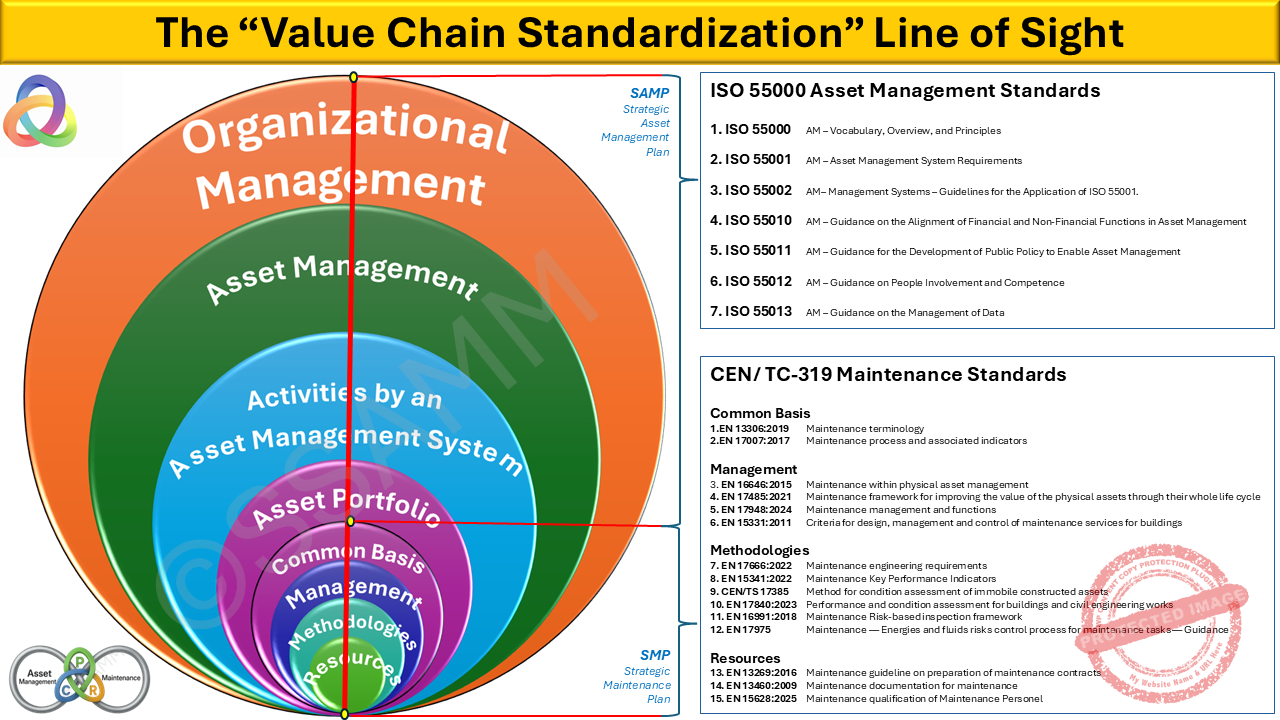
The normative backbone consists of four coherent “layers”:
The ISO 55000 series provides the normative governance framework for Asset Management (line-of-sight, governance, legitimacy). Depending on context, this is supported in practice by related management system frameworks, for example in the field of risk management.
CEN/TC 319 maintenance standards provide the maintenance language and process architecture: terminology, process control, value through lifecycle, performance indicators and competence. This is the backbone for organising Maintenance as a coherent system.
The IEC 60300-3 series supports the engineering dimension: reliability, maintainability and dependability-driven life-cycle choices, including principles for substantiating and improving maintainability.
A1011 and JA1012, in conjunction with IEC 60300-3-11 (RCM), provide the RCM practice foundation: a testable logic for developing and evaluating maintenance programmes in terms of functionality, risk and effectiveness.
The Line of Sight System: Together, these layers form one consistent “line-of-sight” system: from governance frameworks to maintenance processes and methods, and to demonstrable outcomes and rationale in practice.
Delivery (SSAMM LMS) and next steps
- SSAMM LMS (Learning Management System) is the central learning environment for all education and assessment materials and for demonstrable outcomes and documentation.
- Sessions are online-only (Europe, the Americas, Australia/New Zealand). Time slots and time zones are provided on the Schedule & Pricing page.
- In-company delivery is available (including before 8 September 2026): on request.
Which route fits me? (comparison)Schedule & PricingEnrolment / Intake