How our SSAMM envoy Jan Stoker connects identity, neurodivergence, storytelling and Maintenance & Asset Management on the road to PEMAC MainTrain 2026 in Tiohtià:ke/Montréal.
In October 2026, our SSAMM envoy Jan Stoker will travel to Tiohtià:ke/Montréal, Canada, to deliver the opening keynote at PEMAC MainTrain 2026 Click Here.
For Jan, this journey is more than a conference. It is a learning journey.
A journey about language.
A journey about identity.
A journey about connection.
A journey about the meaning of Pou Herenga.
A journey about Maintenance & Asset Management.
And a journey towards the day beyond tomorrow.
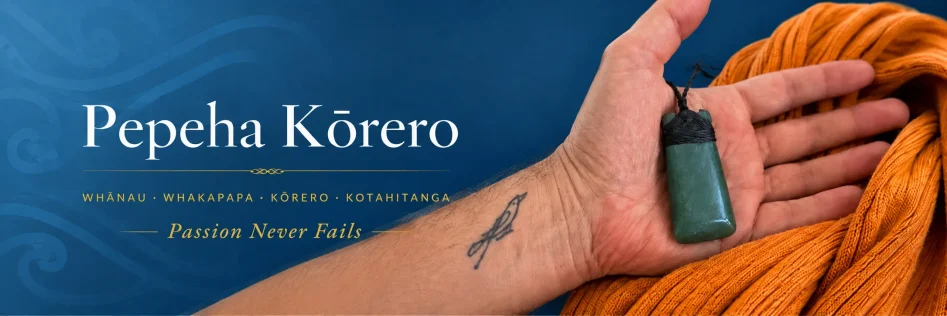
It is also a journey shaped by Jan’s personal credo: Passion Never Fails.
For Jan, this is more than a phrase. It is the energy that has carried him through his life, his learning path and his professional development. His passion for Maintenance & Asset Management has helped him become who he is today: someone who never wants to stop learning, never wants to stop asking questions, and never wants to stop sharing knowledge with others.
The name Kōrero
In Aotearoa New Zealand, Jan received the Māori name Kōrero. Kōrero means story, speech, conversation and dialogue. It is not only a name he carries. It has also become a mirror of what he does.
Jan tells stories.
Jan listens to stories.
Jan connects people through stories.
His pepeha is a personal way of expressing where he comes from, who shaped him, what he carries, why Pou Herenga is so important to him, and what he stands for in the field of Maintenance & Asset Management.
It begins in the middle of the Netherlands, in Utrecht, the city of the Dom Tower and the River Vecht. It carries the memory of his father, whose sign lives on Jan’s arm as a bird. It speaks about travelling the world, riding the thermals, meeting new people and creating connection.
It also speaks about learning.
Learning, neurodivergence and talent
Learning did not come easily to Jan. Only later in life did he discover that he is neurodivergent. That path gave him extra hurdles and detours, but it also shaped him into who he is today in the Maintenance & Asset Management community.
His passion helped him move through those hurdles. Not because the road was easy, but because the purpose was strong. Jan loves the field of Maintenance & Asset Management deeply. He sees it not only as a profession, but as a way to create value, continuity, stewardship and connection between people, organisations and future generations.
That is why he keeps learning.
That is why he keeps sharing.
That is why he keeps telling the story differently.
And that is why Jan stands for neurodivergent people in engineering and technical professions.
Neurodivergence is not a disease.
It is a talent.
For SSAMM Academy, this is an important message. Learning is not only about transferring knowledge. It is also about creating the conditions in which different minds, different experiences and different talents can contribute to the future of Maintenance & Asset Management.
Why this belongs on SSAMM Academy
SSAMM Academy is not only about training.
It is about creating a shared language.
It is about building line of sight.
It is about connecting governance, maintenance, asset management, people, evidence and learning.
It is about helping professionals understand not only what they do, but why it matters.
That is why the Pepeha of Kōrero belongs here. Because education starts with orientation:
Where does a person come from? What does a person carry? What does a person stand for? How does a person connect to others? And how can knowledge create value for people, organisations and society?
For Jan, Maintenance & Asset Management is not only about assets.
It is about stewardship. It is about responsibility. It is about continuity. It is about value. It is about risk and performance. It is about people. And it is about future generations.
This is also why Jan believes that professionals in Maintenance & Asset Management are never truly finished learning. The field keeps changing. Organisations keep changing. Technology keeps changing. Society keeps changing. And therefore, the need to learn, reflect and share knowledge never stops.
For Jan, Passion Never Fails means staying curious, staying generous with knowledge, and staying committed to the profession he loves.
Road to Tiohtià:ke / Montréal
As Jan prepares for PEMAC MainTrain 2026, he also wants to enter Montréal with respect.
Tiohtià:ke, commonly known as Montréal, is located on unceded Indigenous lands. The Kanien’kehá:ka Nation is recognized as custodian of these lands and waters. Tiohtià:ke has long been a place of meeting, exchange and connection among many First Nations.
Jan’s pepeha does not replace local protocol. It is his personal way of showing who he is as a guest, what he carries with him, and how he wants to speak with respect. A short Kanien’kéha opening for Tiohtià:ke/Montréal is being explored with appropriate language and cultural contacts before it will be used publicly. Jan is also exploring whether parts of his pepeha can be translated, adapted or reviewed in Kanien’kéha in a respectful and culturally appropriate way.
The multilingual Pepeha of Kōrero
Below are four versions of the Pepeha of Kōrero.
They are not just translations.
They are bridges.
Each version carries the same core story, but each language gives the story a different rhythm, sound and emotional weight.
That language matters.
That stories matter.
That connection matters.
That learning never stops.
And that passion, when it is real, never fails.
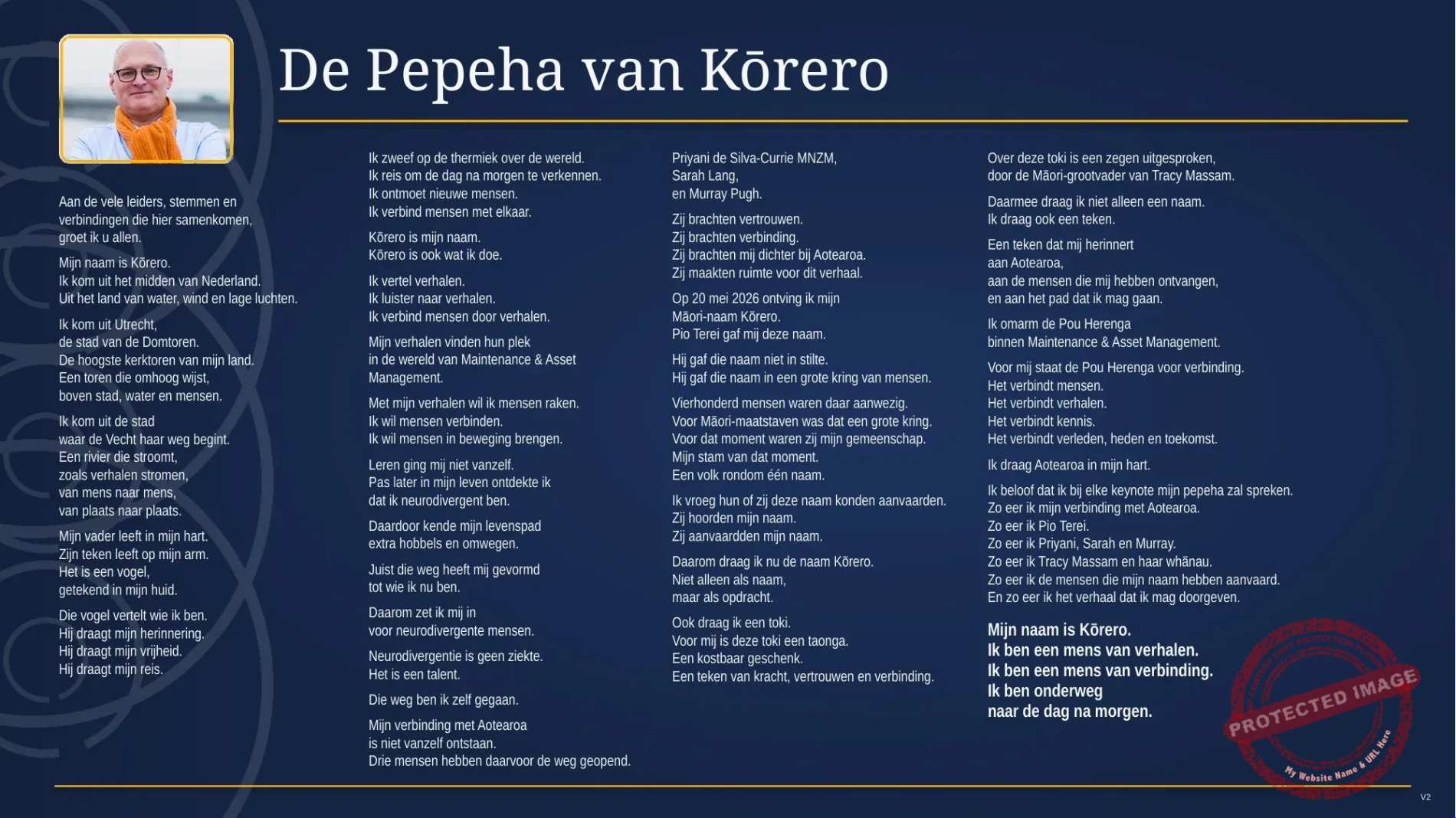
The Dutch version is closest to where I come from.
It speaks of the Netherlands, Utrecht, the Dom Tower, the River Vecht, my father, the bird on my arm, and the path that shaped me.
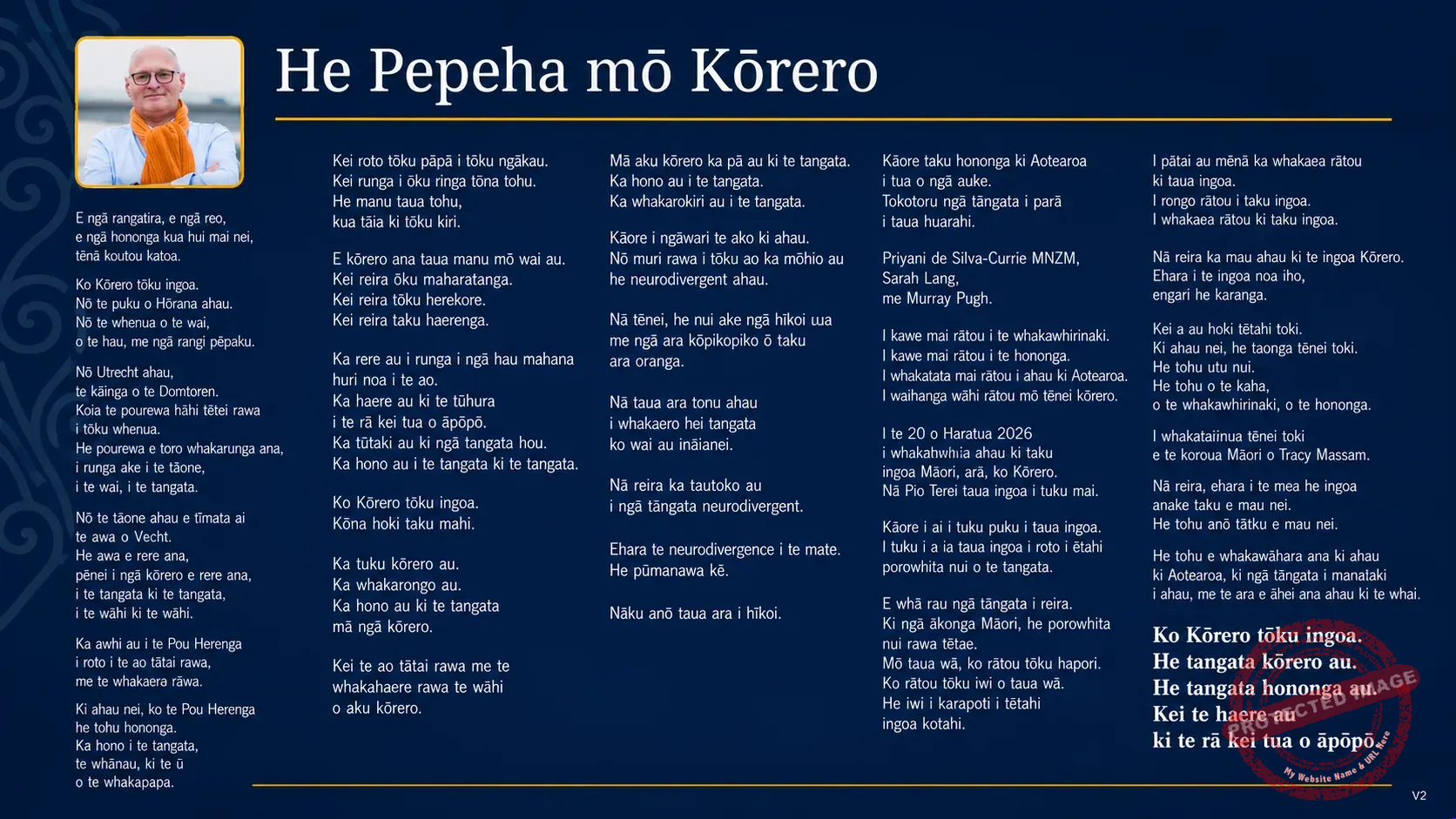
The Māori version carries the origin of my name Kōrero.
It honours Aotearoa, Pio Terei, the people who accepted my name, the toki I carry, and the Pou Herenga as a symbol of connection.
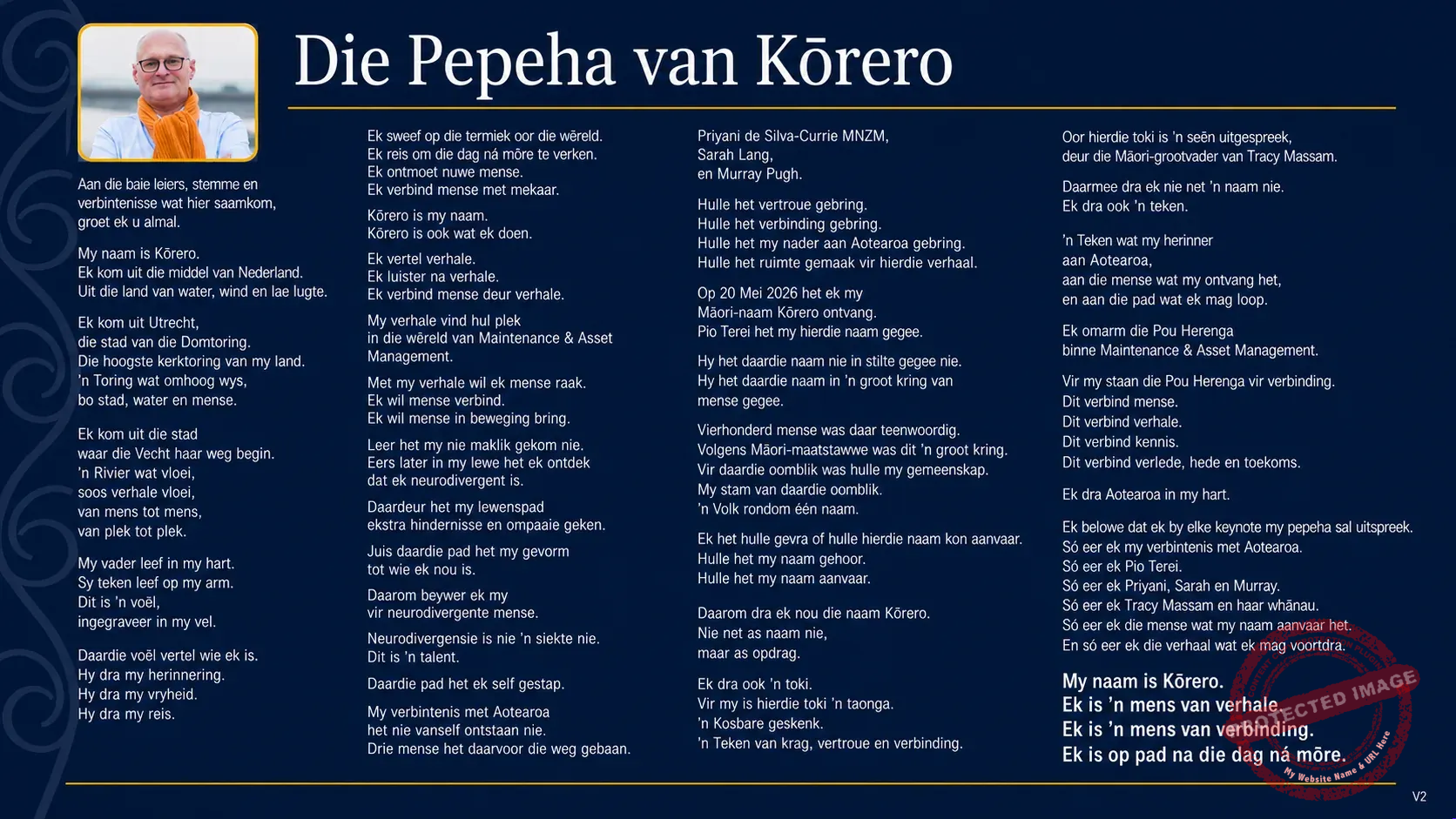
The Afrikaans version feels close to Dutch, but carries its own voice. It reminds him that language can be familiar and different at the same time. That is also how learning works: we recognise something, and then we discover something new.
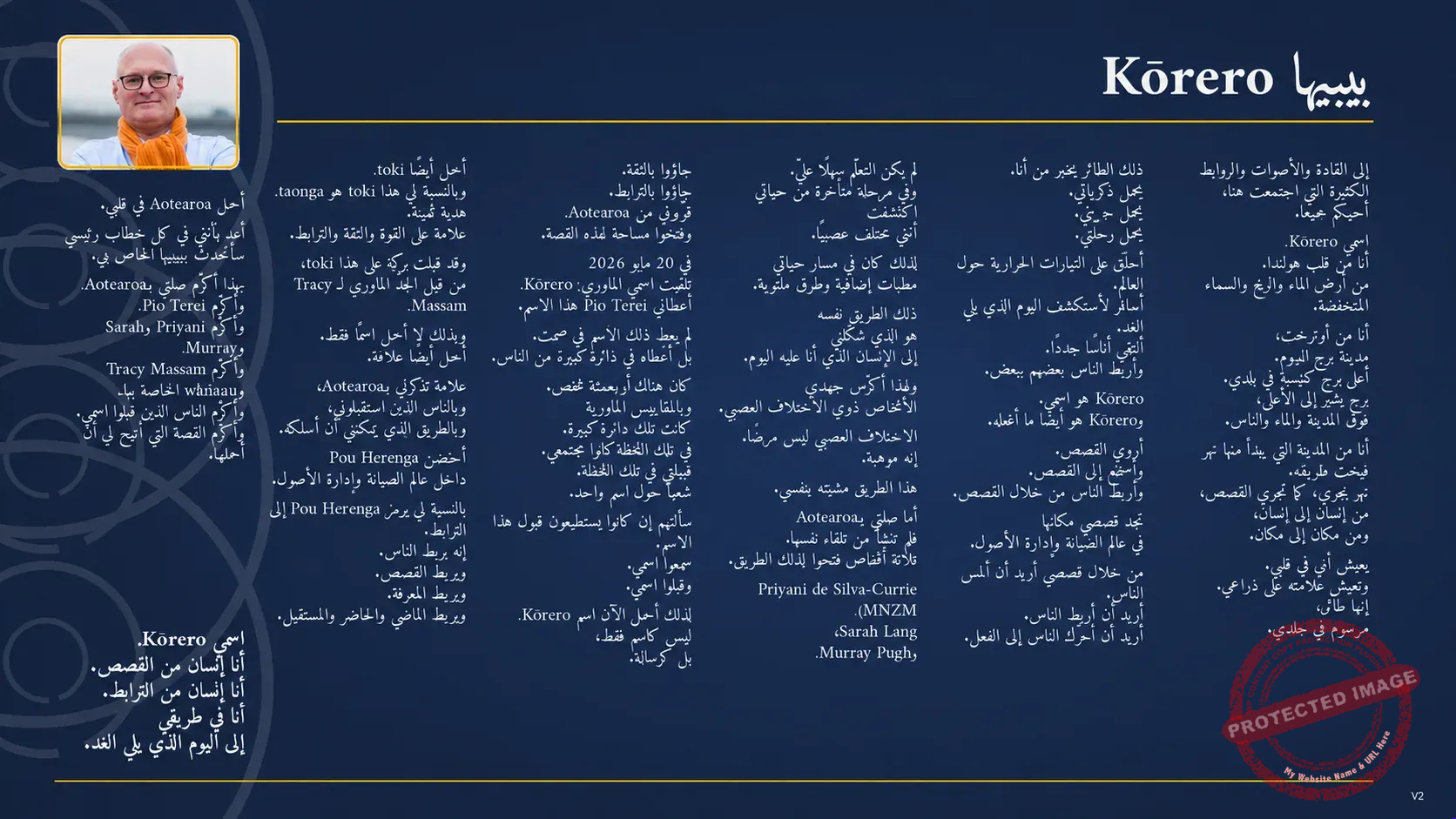
The Arabic version opens the story to another language world.
It is a step towards wider connection, inclusion and dialogue. It reminds me that stories can travel further than the place where they began.